| |

|
|
|
|
|
|
|
|
|
|
|
The end of the year is closing in fast. Holiday lights, chilly weather and that Mariah Carey song playing over and over aren’t the only signs of the season. Automakers are taking stock of where they stand heading toward an uncertain New Year and announcing tough end-of-the-budget-year decisions. It’s starting to feel like old times in Detroit with Christmas layoff announcements, ambitious plans delayed and talk of battening down spending for 2023. These are not cheery holiday messages. Is it too early in the day for a spiked eggnog?
|
|
|
|
|
|
|
|
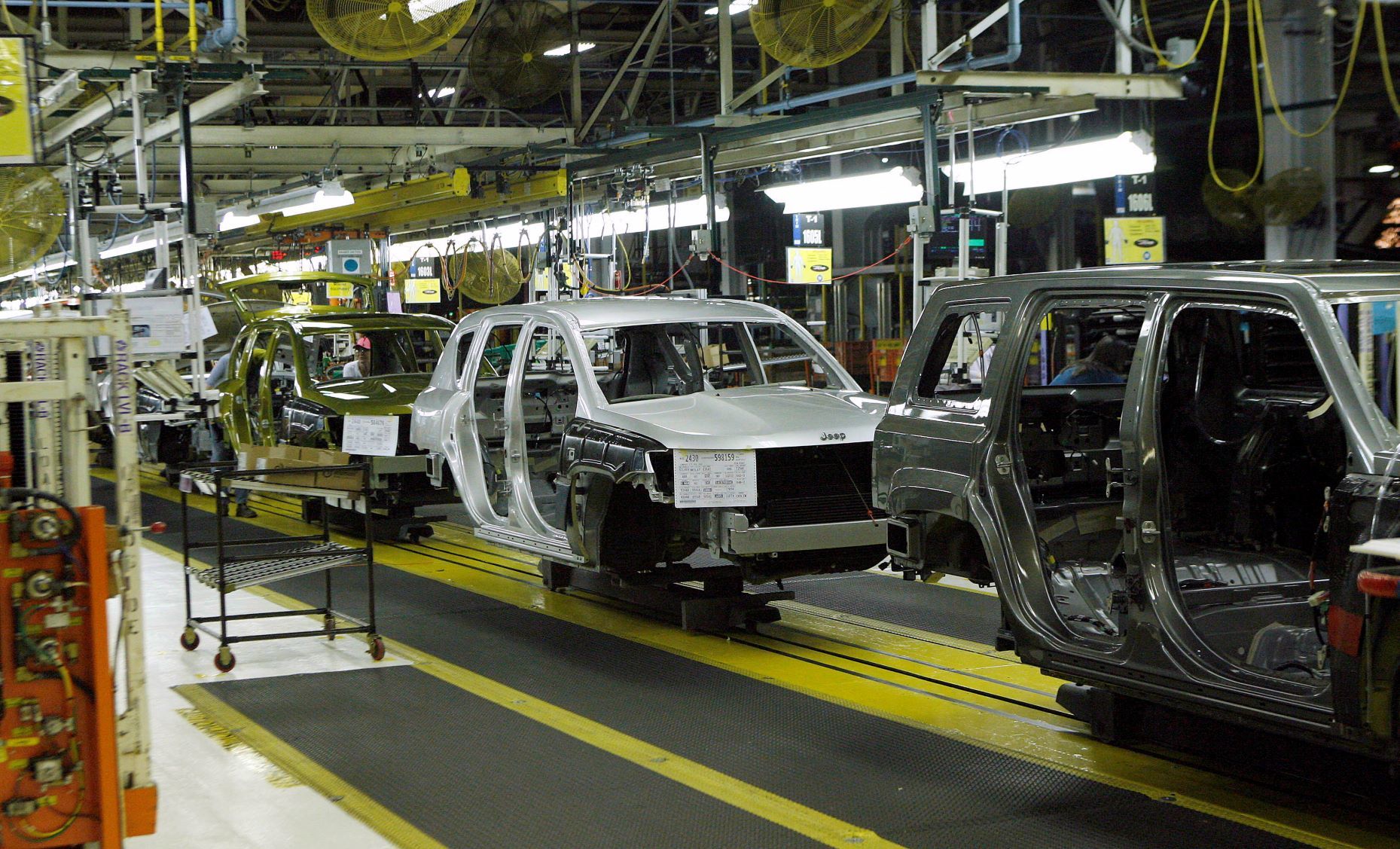
The assembly line at Stellantis' Jeep factory in Belvidere, Ill.
|
|
|
Stellantis launches the North American capacity reckoning
Stellantis on Friday said it will indefinitely stop production at its Belvidere assembly plant in northern Illinois that builds Jeep Cherokee compact SUVs. The company did not say it is shuttering the plant for good because the language of the current contract with the United Auto Workers doesn’t allow permanent plant closures.
This will not be the last car factory in North America that shuts down during the next few years. Here’s why:
The U.S. car and light truck market has shrunk from pre-pandemic levels of 16 million to 17 million vehicles annually to below 15 million vehicles annually. That’s five to eight factories worth of production, no longer required. As prices for new vehicles rise, a smaller share of consumers can afford them. Cox Automotive reckons the share of the U.S. population that bought a new vehicle has fallen to 4.1% from 4.9% a decade ago. That’s equivalent to nearly 2.5 million customers exiting the new vehicle market.
At the same time, automakers - old and new - have launched the most ambitious wave of new factory construction North America has seen in decades.
Tesla alone has added a factory in Austin capable of building 400,000 or more vehicles a year, and has signaled it plans to add a lot more capacity. Ford is building a 21st Century equivalent of its historic Rouge mega-factory in Western Tennessee. Hyundai is building a new factory in Georgia. Toyota and Mazda are gearing up a new assembly operation in Alabama. Rivian has revived a dead assembly plant in Illinois, and has promised to build a new plant in Georgia. Lucid, Fisker, Foxconn — all have launched or plan new production plants. I’ve missed a few. You get the idea.
Moreover, the capacity surge is not just a North American phenomenon. New EV factories are going up in Europe - Mercedes just announced an EV only factory for Poland.
Stellantis blamed its decision on “the increasing cost related to the electrification of the automotive market.” UAW leaders said the company wants to move production of its next generation compact Jeep SUVs - including electric models - to Mexico.
Is Stellantis setting the stage for tough bargaining in next year’s contract talks with the UAW, and with state and federal policymakers who control manufacturing subsidies? Sure.
But the auto production capacity math in North America is clear. Barring big drops in vehicle prices, or a surge in both population and average incomes, automakers have more production capacity than they need to meet demand in the region. Something will have to give.
Rivian hunkers down
Electric adventure truck and commercial van startup Rivian is “pausing” a partnership to enter the European commercial van market via an alliance with Mercedes-Benz.
Rivian said it wants to focus on its existing, North American consumer vehicle and Amazon delivery van operations - “taking into consideration our current and anticipated economic conditions.”
Rivian burned nearly $1.4 billion in cash during the third quarter. Battery costs are surging, pushing break even performance down the road. Turning those problems around does not get easier if the forecasts of a recession prove correct.
|
|
|
|
|
|
|
|
|
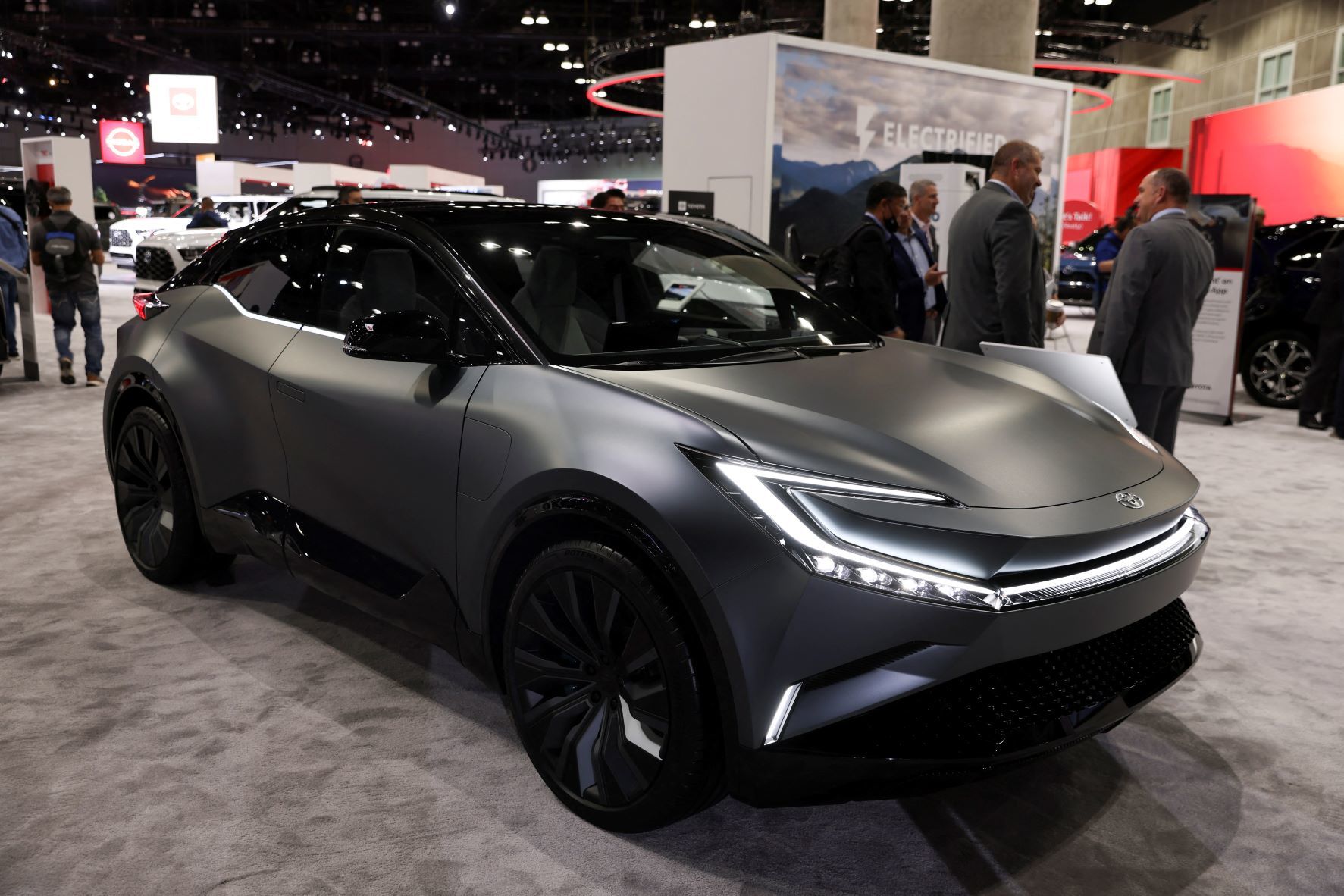
A Toyota BZ EV: Headed in a new direction?
|
|
|
Toyota revamps, delays EV programs
Toyota plans changes to the timing and technology of future electric vehicle programs as it scrambles to keep pace with Tesla and other EV market rivals, Reuters reported.
The Japanese auto giant is expected to tell key suppliers it wants to move faster on technology to boost the performance of future EVs, and at the same time Toyota is considering delaying some EV programs planned between now and 2026, sources told Reuters. Those delays would allow Toyota to make successors to its two current EV offerings - the Toyota bz4x and Lexus RZ - more competitive.
Volkswagen considers downsizing in China
Here’s one more example of year-end reality reckoning: Volkswagen is considering whether to pull its Skoda brand out of China, a senior executive told the German weekly Automobilwoche. VW’s new leaders appear to be re-thinking a number of expensive initiatives and legacy strategies as EV development costs soar and competition intensifies.
|
|
|
|
|

|
|
|
|
Mr. Claus, your ride's here!
|
|
|
Holiday deals from Scrooge and Marley Motors
Remember when December brought crisp, white snow and eye-popping deals on new vehicles, especially luxury cars? There’s still a chance for the snow in Detroit, but the seasonal car deals? Not so much.
This year’s year-end sales promotions are stingier than in years past, said Cox Automotive’s Brian Finkelmeyer.
“The December not to remember,” he said, referring to the annual Lexus “December to Remember sales campaign. “No great lease offers. Minor cash. A little bit of (interest rate) support.”
There is a 2.9% loan offer on the Lexus RX 350 SUV, Finkelmeyer said. But the Mercedes Santa Claus “has an empty bag.”
Mercedes is promoting “special offers” on EQS and EQB electric vehicles, but they are modest compared to the pre-pandemic past.
One place to look for holiday cheer is Ram, the Stellantis truck brand. The company is promoting a $3,000 cash rebate plus no loan payments for 90 days on certain Ram pickup models. Stellantis’ Jeep and Ram brands have relatively high inventories compared to most competitors, Finkelmeyer said.
Uncle Sam has a $2.5 billion gift for GM
U.S. Energy Secretary Jennifer Granholm is scheduled to visit Detroit today to formally award $2.5 billion in low-cost loans to help General Motors and its battery production partner LG Energy Systems build three U.S. factories for its Ultium battery joint venture. Reuters reported the loans were in the works back in July.
GM and LG are expected to soon announce plans to build a fourth Ultium battery plant in Indiana.
Geely’s Zeekr seeks a $1 billion U.S. IPO
Zeekr, one of the gaggle of brands started by Chinese automaker Geely, is planning a U.S. stock listing to raise $1 billion. Zeekr will be fighting for mind and wallet share in a choppy market with Vietnam’s Vinfast, which said it wants to launch a U.S. IPO.
The Takata airbag tragedy’s long tail
U.S. regulators confirmed another death caused by an exploding Takata airbag.
The victim was driving a 2002 Honda Accord - a 20-year old car. That underscores a significant problem for automakers that goes beyond the Takata airbag scandal: How long should manufacturers be responsible for ultra-old vehicles?
High new vehicle prices have pushed the average age of new vehicles on the road to a record 12.2 years. That is beyond the designed lifespan of many vehicle components. And as the Takata tragedies show, owners of super-old vehicles often don’t get, or don’t respond to, recall notices.
A Swiss EV industry nightmare
Switzerland’s proposal to limit the use of EVs in the event of natural gas shortages and brownouts on the electric grid is causing a panic attack within the auto industry. Switzerland, by itself, is a small market. But should France or Germany follow suit, automakers could face a major setback for mass market acceptance of EVs.
|
|
|
|
|
Essential Reading
|
|
|
|
|
|
|
|
Recommended newsletters
|
|
|
|
|
|
Reuters Power Up
|
|
|
|
Find out everything you need to know about the global energy industry and the forces driving the transition to renewable fuels.
|
|
|
|
Subscribe
|
|
|
|
Reuters Sustainable Switch
|
|
|
|
Make sense of companies and governments grappling with climate change, diversity, and human rights.
|
|
|
|
Subscribe
|
|
|
|
|
|
|
|
|
|
|
|
|
|